


The U.S. Army’s plan to conduct a controlled detonation of nearly five tons of lead azide at a military ammunition plant in Iowa has been moved to Wednesday.
The detonation has raised concerns from the public over the potential health impacts and a legal challenge from environmental groups.
Two rapid, controlled detonations were initially scheduled to take place at the Middletown plant midday Friday to safely dispose of degraded lead azide, according to the U.S. Army.
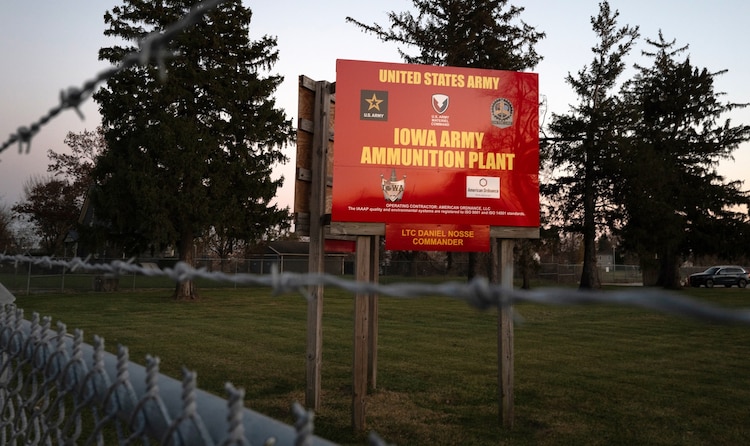
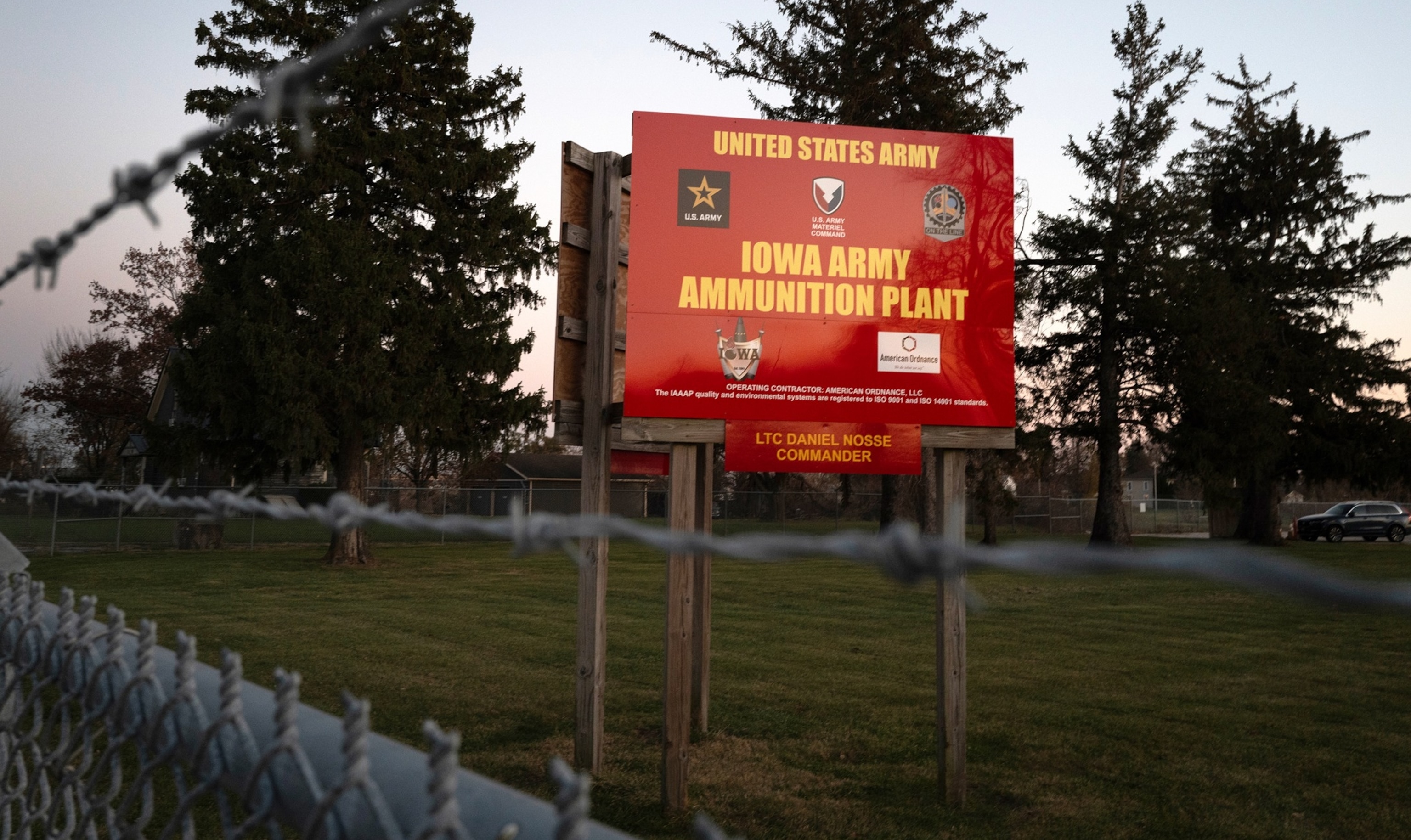
A sign identifying the facility sits inside a fence surrounding the Iowa Army Ammunition Plant on Nov. 19, 2026, in Middletown, Iowa.
Scott Olson/Getty Images
But Army officials announced Thursday that the detonation of nearly 10,000 pounds of lead azide would be pushed until Monday.
On Sunday night, the Army said in a statement it would be moved to Wednesday to “allow for optimal weather conditions and all mitigation measures to be emplaced.”
“The Army and our interagency partners have been working around the clock to safeguard all Americans in the region,” military officials said in a statement on X. “The health and safety of all Americans has and always will be our first priority.”
Lead azide is the primary explosive used to initiate munitions. The controlled detonation is to dispose of degraded lead azide, which is highly sensitive and extremely unstable, the Army said. Due to the risks of accidental detonation in packing and transporting it, “safely destroying it in place is the only responsible option,” the Army said.
According to the Environmental Protection Agency, which issued the permit for the detonation, the “recrystallization of the stored lead azide has increased the material’s sensitivity to friction and shock, and disturbing the containers of lead azide could create an unacceptable risk of unintentional detonation.”
The Department of Health and Human Services, the EPA and the Army said Friday the agencies are taking “extreme mitigation measures” to ensure the safety of the detonation, which the Army said will cause a dust plume containing some lead, loud noises and ground vibrations and possibly broken windows.
“The entire interagency is working together to ensure that the controlled detonation in Middletown, Iowa is conducted in the safest fashion possible,” the agencies said in a joint statement released Friday.
The statement said officials had been preparing for the event since March and “agencies involved are prepared to take the most extreme mitigation measures available to ensure there is no risk to the public and any disruptions are minimized.”

A sign hangs from a fence at the Iowa Army Ammunition Plant on Nov. 19, 2026, in Middletown, Iowa.
Scott Olson/Getty Images
“The entire Trump administration will continue to engage with state and local officials, as well as the broader community, to keep all apprised of updates as they arise,” the statement continued.
The Iowa Environmental Council and Sierra Club Iowa Chapter filed an emergency motion on Thursday seeking to halt the detonation.
In their emergency motion, the groups argued that the detonation could spread lead dust across a large area, potentially reaching communities more than 100 miles from the plant.
The Army’s latest modeling projects that lead dust could settle across an area approximately 25 miles long and 5 miles wide, including homes and waterways, according to the filing. The groups further argue that people, livestock and wildlife could also continue to face exposures to lead once it settles into the ground.
The filing also questioned the Army and EPA’s handling of public notification, alleging that some of the potentially impacted communities were not given direct or timely notice.
In an order filed late Thursday night, the Eighth Circuit Court of Appeals granted an administrative stay of the permit while the federal appeals court considered the emergency request to formally halt the detonation.
But on Sunday, the Justice Department notified in a court filing that the Army intends to move forward with its plan, citing an “immediate risk” that those materials could “spontaneously explode.”
The Justice Department is arguing that the Army has the authority to move forward without that permit — saying the EPA’s regulations have an exemption from permitting requirements in events that require immediate action.
The DOJ said it intends to invoke that exclusion in this “emergency situation” given what it says is the imminent threat, including from incoming cold weather– which they warn has “dramatically increased the risk of an uncontrolled explosion and threat to public safety.”
“As the outside temperatures drop the risk of an uncontrolled explosion increases because the formed crystals can break more easily in freezing temperatures,” the filing said.
The Army does still intend to “act consistent” with the terms of the permit, the filing said, including mitigation efforts involving the lead dust.
“In short, a controlled detonation is by far safer than an uncontrolled explosion,” the filing said.
Read the original article here