


I’ll give you a plot and you tell me which 2023 film I’m referring to: A wide-eyed waif who lives in a technicolor world gains sentience and leaves on an existential odyssey that exposes her to the inequalities of a modern society.
If you answered Poor Things, you’re right. If you answered Barbie, you’re also right.
Both films have been applauded as expert examples of empowering parables about the adversities of being a woman. However, their critiques of capitalism and patriarchy —packaged in delicious pastels and tightly wrapped with a coquettish bow, and delivered with a cutesy wink—are ultimately shallow. Hailing either film as a feminist triumph would be like saying “WAP†solved misogyny in hip-hop or that Lean In eliminated systemic sexism.Â
I couldn’t help but lament the misguided nature of calling either film a ‘feminist masterpiece.’
Don’t get me wrong, I loved both movies. Mark Ruffalo gave one of his best performances as the delightfully louthe Duncan Wedderburn in Poor Things, while Barbie perfected the cotton candy landscape of my dreams. But despite the enchantment of watching them on the big screen, I couldn’t help but lament the misguided nature of calling either film a “feminist masterpiece.â€
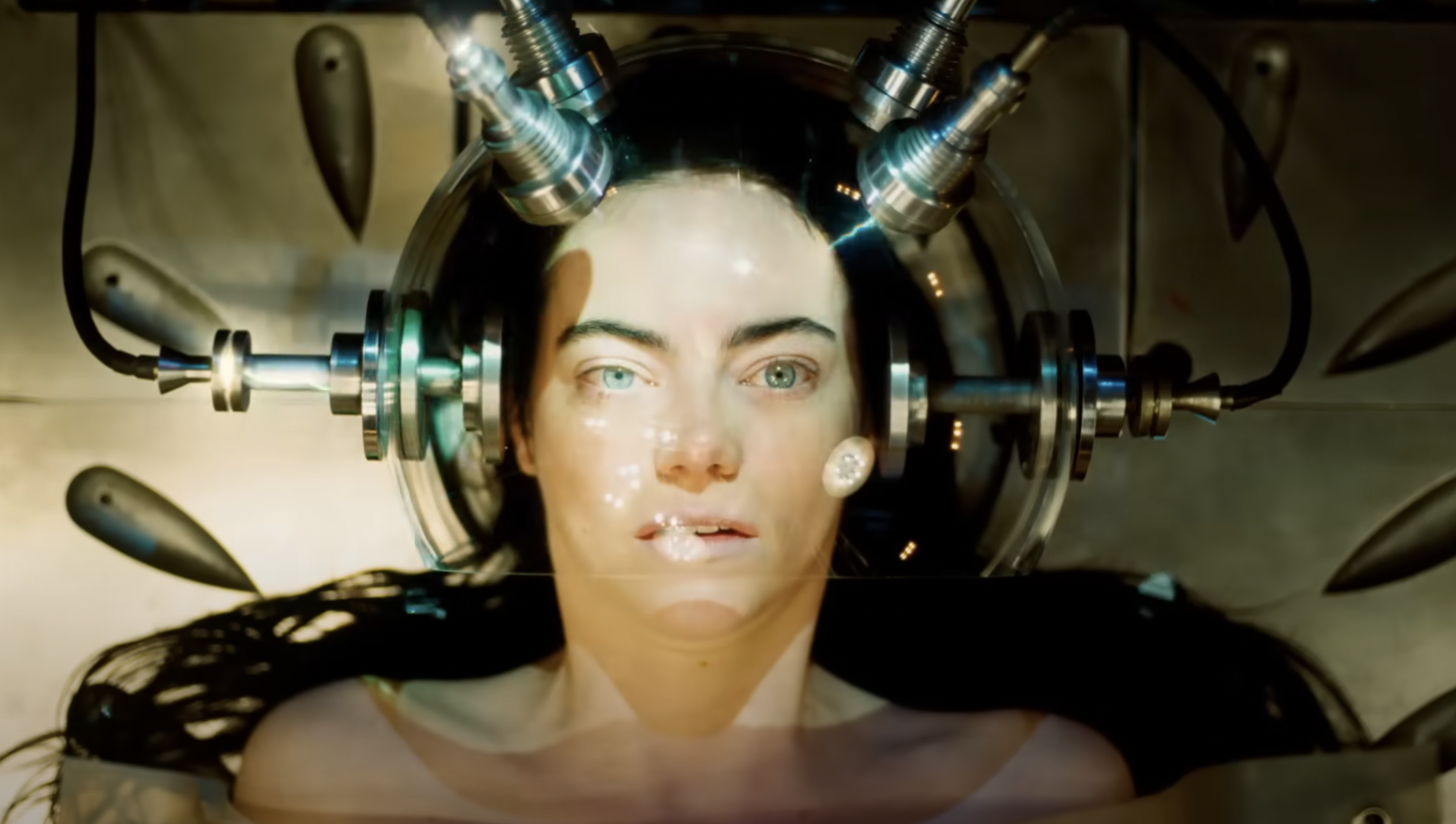
In Poor Things, a sexy and pregnant Bella Baxter (Emma Stone) is revived from a suicide attempt by a maimed surgeon (Willem Dafoe), who transplants her baby’s brain into her skull to revive her, essentially rendering her both mother and child.Â
Let’s dissect that: A man neglects an unconscious woman’s bodily autonomy by cutting her open and further violates her by sticking her unborn child’s brain in her head. And he’s supposed to be one of the sympathetic ones! There’s also the fact that for most of the film, she calls him God.Â
The film starts in black and white and transforms into opulent vibrancy with Bella’s first orgasm. There are interesting threads to pull on: How would a woman without shame, a hedonist who follows pleasure and indulgence—eating pasteis de nata until she pukes orange sludge, rubbing her clitoris at the breakfast table—perform in polite society? How does shame get instilled throughout our upbringings and reinforced via social disdain? In what I consider one of the film’s biggest missed opportunities, Poor Things avoids delving into these provocations, instead focusing on the transformation of her obsession with sex from pure pleasure to labor.
Barbie exults: The world would be a utopia if women were in charge!
During one extended vignette, Bella works at a brothel in what is supposed to be a celebration of her cavalier attitude toward sex and a symbol of her increasing agency. It’s the oldest profession, why shouldn’t she engage in the simple demand/supply of it all? “We are our own means of production!†Bella shouts at Duncan, in what is supposed to be an empowered cry of agency. However, the film shies away from actually analyzing the circumstances that often force women into sex work, as well as the dangers that often befall women in the industry; her foray at the brothel is depicted as without consequence, frivolous, played for shock value alongside the repeated gag of Bella’s bored face during a male client’s furious humping.Â
Barbie is the sanitized sibling of the often-crude Poor Things, and suffers from a similar depthlessness. While behind-the-scenes female involvement incorporated more interiority (Poor Things was written and directed by men, based on a book by a man), Barbie is at its core a feature-length commercial proselytizing Barbie’s official slogan: You can be anything! But what this hackneyed message airbrushes is the lack of agency millions of women face due to inequitable social systems. The women who don’t have the privilege of choice.
Instead, Barbie exults: The world would be a utopia if women were in charge! Yes, capitalism is bad, but not if we had more female millionaires! The system isn’t broken but only cracked around the edges; gender equality is the caulk to seal the world back together.Â
Of Sheryl Sandberg’s Lean In, the prolific cultural critic bell hooks wrote: “It is as though Sandberg believes a subculture of powerful elite women will emerge in the workplace, powerful enough to silence male dominators. Her optimism is so affably intense, it encourages readers to bypass the difficulties involved in challenging and changing patriarchy so that a just moral and ethical foundation for gender equality would become the norm.†hooks may as well have been talking about Barbie.Â
I want films that paint the whole messy mural of feminine spectra.
Much like Barbie, Bella is treated as a doll—an object to be played with and rendered silent. When the impolitely candid Bella makes a scene at dinner with her displeasure for the food and her desire to sock a crying baby at a neighboring table (honestly, relatable!), Duncan pushes her against a wall: “You will rejoin the table and will confine yourself to the following three phrases: ‘how marvelous,’ ‘delighted,’ and ‘how do they get the pastry so crisp?’†Once Barbie’s Ken learns of patriarchy in the Real World, he returns to Barbieland, evicts Barbie, and transforms her Dreamhouse to a preposterously hyperbolic bachelor pad known as the “Mojo Dojo Casa House.†Men in these films are so cartoonishly villainous that the best ones are seen in a compassionate light simply because they are not as bad as the others. Ramy Yousseff’s character—God’s protege and Bella’s betrothed—is a “good guy†simply because he does not condemn Bella’s sex work. The standards we have for men are so low!
Both films portray patriarchy as simple, straightforward—all wolf whistles and ass groping—as if the daily fear of men that women live with in the real world is not insidious, textured, and often times subtle. Although not without its flaws, the 2020 film Promising Young Women deftly shows how sometimes the most dangerous men are the self-proclaimed “nice guys†who own koozies embroidered with feminist slogans. Or “Cat Person,†the viral New Yorker short story turned film, which catalogs the dark psyche of a man who does not get what he feels entitled to.Â
Poor Things is supercilious yet silly, cramming in a bunch of sociopolitical topics without dedicated dissection. The frivolity makes the 2.5 hour run-time feel like a slap in the face. As Bella becomes progressively progressive, she donates to the poor, attends socialist meetings, and blithely comments on the fragility of hysterical men. All this evolution gets undermined when the film ends with her sipping a cocktail with her queer lover while commanding a zombie Bella 2.0 to fetch more drinks in her cloistered, opulent mansion.Â
Similarly, Barbie ends with the titular character’s voluntary transformation into a real girl. The evil Mattel executives agree to produce a “regular Barbie,†a doll that eschews beauty standards because the concept will make the company boatloads of money. Barbie apologizes to Ken, men are included in Barbieland, and everyone kumbayas that cooperation is the antidote to an unjust society.Â
That both films end with the enlightened dolls recreating and upholding the same systems that they spend the entire plots undermining is a convenient absolution. Are Mattel executives forgiven for the damage they’ve caused through endless endorsements of unrealistic beauty standards because it cheekily pokes fun at itself through the film’s depiction and recognition of their boardroom sausage fest? Does the male gaze in Poor Things get a pass because the woman in question is a libertine exhibitionist, unashamed and unabashed? These happy, Hollywood endings promote the feeling of victory without asking who the true winners are.Â
While I thoroughly enjoyed both movies and would happily consume their cotton candy fluff again, upholding either as the zenith of feminist commentary disallows a future where truly nuanced films don’t get their due credit. For all of its preoccupation on Bella’s vagina, not once do we hear of her ability for menstruation or motherhood; there’s a singular shot where she lingers on the cesarean scar that birthed her but that introspection is not deepened beyond the discovery of her origin. And despite Barbieland’s representation of plus-sized, Black, Brown, Asian and disabled women, it is important to remember that diversity (especially when most of them are silent and perfunctory) does not equal inclusion. I want a Poor Things where Bella discovers the horrors and joys of menstruation for the first time! I want a Barbie where two Barbies kiss! Namely, I want films that paint the whole messy mural of feminine spectra. To settle for anything less would be a disservice to whichever plastic dream—or real—world we exist in.
Read the original article here