


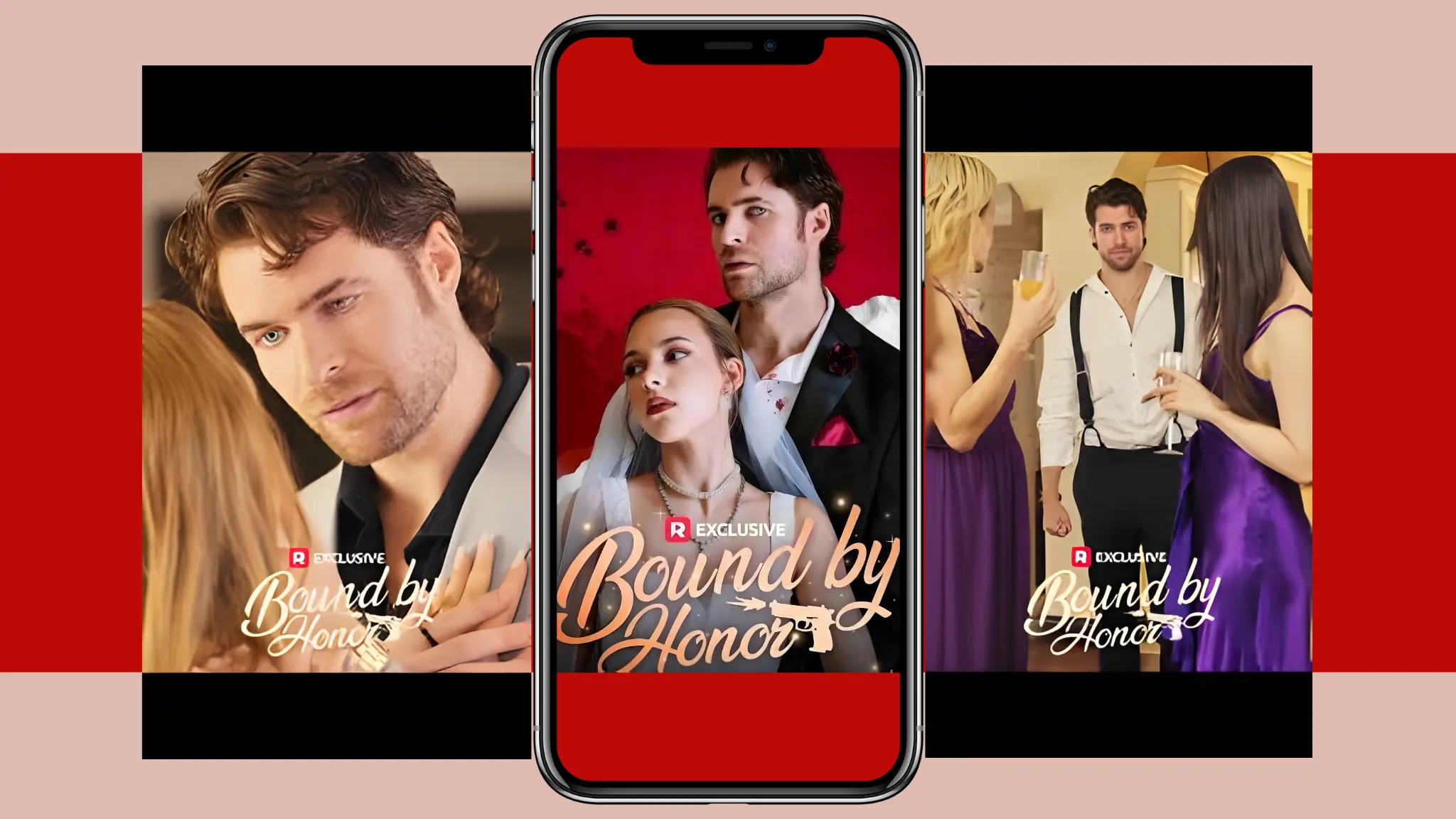
The journey from page to screen is nothing new. We’ve all followed beloved classics and buzzy contemporary novels as they’ve made their way to theaters and major streaming platforms. But the adaptation of Bound by Honor by Cora Reilly marks a different kind of milestone — not just for the author, but for the rapidly evolving world of “vertical” storytelling.
Released in November on ReelShort — the first vertical streaming platform focused on short-form, serialized storytelling — Bound by Honor quickly became one of the platform’s most-watched titles. Starring Rhett Wellington and Savannah Coffee, the series amassed 336 million views, propelling Reilly’s original novel back into Amazon’s Top 100. For an author whose mafia romances have sold nearly 900,000 copies, generated more than 800 million page reads in English, and been translated into 15 languages, the adaptation expanded an already global fan base into an entirely new format.
But what exactly is a “vertical” series — and why is it booming?
The Rise of Vertical Storytelling
Vertical dramas are designed specifically for smartphones, filmed and formatted to be watched upright rather than horizontally. Episodes are short — often one to three minutes — and released in rapid succession, creating highly addictive, cliffhanger-driven storytelling optimized for on-the-go viewing. If Netflix helped define the binge-watch era with hourlong episodes and season drops, vertical platforms have reimagined bingeing for a generation scrolling between texts, social feeds and streaming apps.
The trend has its roots in Asia, particularly China, where micro-dramas exploded in popularity over the past several years. As attention spans fractured and mobile consumption surged, creators began producing premium serialized stories tailored to how audiences were already watching: vertically, quickly and continuously. The model proved lucrative — and exportable.
ReelShort has positioned itself at the forefront of this U.S. expansion. Unlike traditional streaming giants such as Netflix or Hulu, which rely on subscription-based access to full-length films and episodic series, ReelShort operates primarily through short, serialized episodes that often use a freemium or pay-per-episode structure. The storytelling leans into heightened emotion, romance, suspense and dramatic twists — plots that thrive in bite-sized installments.
From the Vertical Page to the Vertical Screen
What sets ReelShort apart from other emerging players in the vertical space is its emphasis on book adaptations and recognizable intellectual property. While several competitors focus heavily on original melodramas or algorithm-driven romance tropes, ReelShort has actively pursued established authors and fandoms. Reilly’s Bound by Honor exemplifies this strategy. Her bestselling mafia titles — already commanding a devoted readership — provided a ready-made audience eager to see beloved characters brought to life.
“I’m very excited to see how ReelShort visualized something that’s only lived in my head and the minds of my readers so far,” Reilly said prior to the release. “I know it’ll bring out all the emotions, and I’m here for it!”
Following the runaway success of Bound by Honor, the cast will reunite for a second adaptation, Bound by Love, cementing the collaboration. And industry watchers are paying attention. In its 2026 predictions, The Hollywood Reporter noted that ReelShort is entering a significant expansion phase, broadening its drama offerings, diversifying genres and growing its overall content footprint.
Beyond Romance
As part of that growth, ReelShort is moving beyond romance into high-concept sci-fi, action thrillers and elevated fantasy. Recent releases such as American Sniper: The Last Round and the Navy-themed drama Callsign: Legacy signal that micro-dramas are no longer confined to one lane. The category is evolving — creatively and commercially.
For readers, the adaptation of Bound by Honor represents more than a new format; it signals a shift in how stories travel. From classic novels landing on prestige cable to contemporary romances igniting vertical screens, the through line remains the same: powerful storytelling finds its audience. What’s changing is the screen — and sometimes, its orientation.
Read the original article here