


Ryanjlane | E+ | Getty Images
Rebates tied to home energy efficiency and created by the Inflation Reduction Act may start flowing to many consumers within months. Â
The federal government is issuing $8.8 billion for Home Energy Rebates programs through states, territories and tribes, which must apply for the funding. The U.S. Department of Energy approved the first application for New York on April 18, awarding it an initial $158 million.
The DOE is hopeful New York will open its program to consumers by early summer, according to Karen Zelmar, the agency’s Home Energy Rebates program manager. The state has the fourth-largest total funding allocation, behind California, Texas and Florida. Â Â
The federal rebates â worth up to $14,000 or more per household, depending on a state’s program design â are basically discounts for homeowners and landlords who make certain efficiency upgrades to their property.
More from Personal Finance:
Why FEMA has spent $4 billion to help destroy flood-prone homes
90% of qualifying EV buyers opt to get $7,500 tax credit upfront
What the SEC vote on climate disclosures means for investors
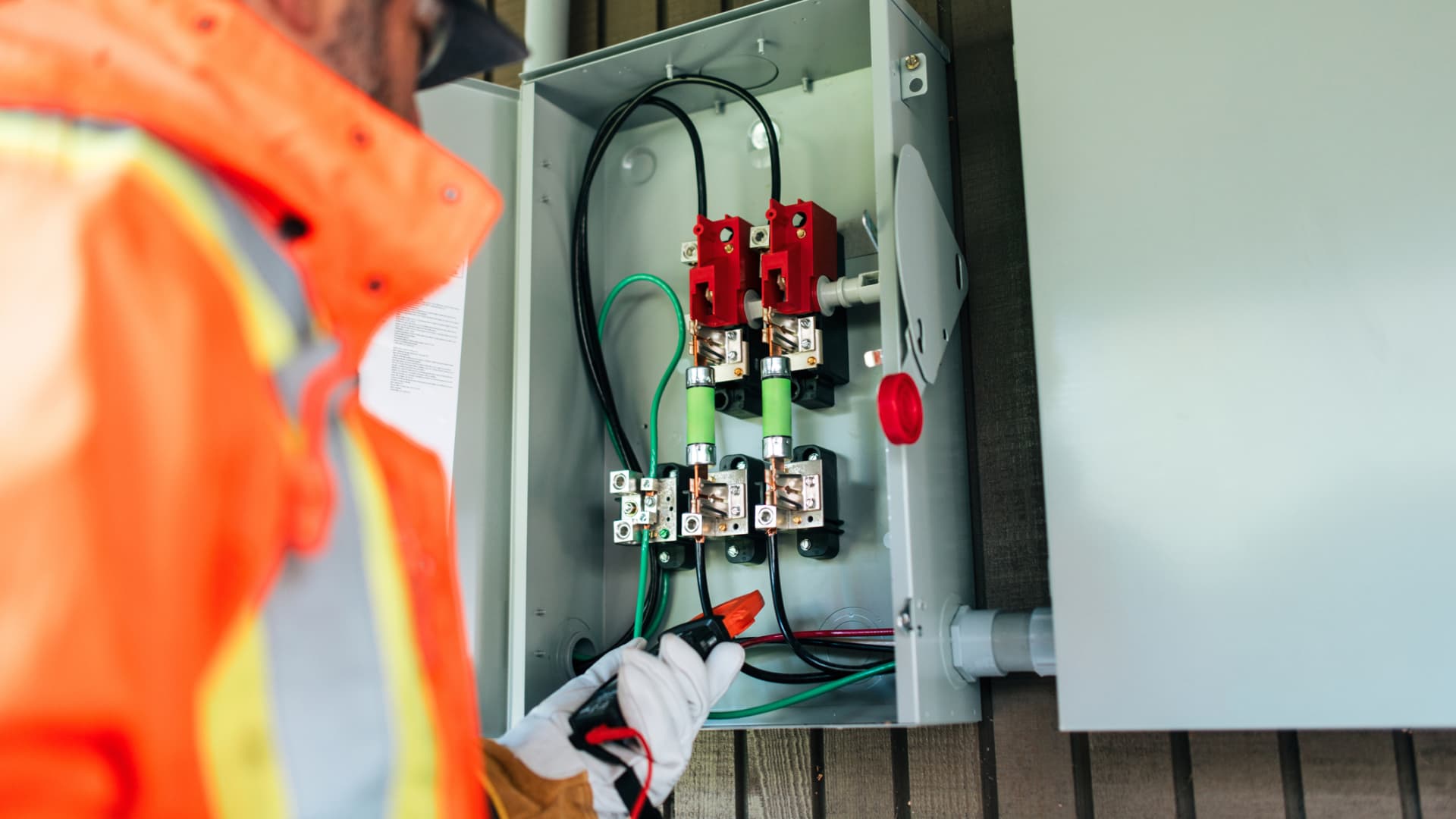
The rebates aim to partially or fully offset costs for efficiency projects like installing electric heat pumps, insulation, electrical panels and Energy Star-rated appliances.
Their value and eligibility vary according to factors like household income, with more money flowing to low- and middle-income earners.
The DOE also expects the programs to save households $1 billion a year in energy costs due to higher efficiency, Zelmar said.

Eleven other states have also applied for funding: Arizona, California, Colorado, Georgia, Hawaii, Indiana, Minnesota, New Hampshire, New Mexico, Oregon and Washington. Many other states are also far along in their application process, Zelmar said. Â
“We certainly hope to see all the programs launched … by this time next year, and hopefully much sooner than that for many of the states,” she said.
States must notify the Energy Department they intend to participate by Aug. 16, 2024. Applications are due by Jan. 31, 2025.
These are key details about the rebates
The Inflation Reduction Act earmarked $369 billion in spending for policies to fight climate change, marking the biggest piece of climate legislation in U.S. history. President Biden signed the measure into law in August 2022.
The IRA divided $8.8 billion in total rebate funding between two programs: the Home Efficiency Rebates program and the Home Electrification and Appliance Rebates program.
New York’s application was approved for the the latter program. So far, just four states â Georgia, Oregon, Indiana and New Mexico â have applied for both.
“I hope that at this time next year we have 50 states with rebate programs,” said Kara Saul Rinaldi, CEO and founder of AnnDyl Policy Group, a consulting firm focused on climate and energy policy.
While their goals are the same â largely, to reduce household energy use and greenhouse gas emissions â the two programs’ approach to household energy savings differs, Saul Rinaldi said.
The Home Electrification and Appliance Rebates program
The Home Electrification and Appliance Rebates program pays consumers a maximum amount of money for buying specific technologies and services, Saul Rinaldi said.
Here are some examples from the Energy Department:
- ENERGY STAR electric heat pump water heater â worth up to $1,750
- ENERGY STAR electric heat pump for space heating and cooling â up to $8,000
- ENERGY STAR electric heat pump clothes dryer â up to $840
- ENERGY STAR electric stove, cooktop, range, or oven â up to $840
- Electric load service center â up to $4,000
- Electric wiring â up to $2,500
- Insulation, air sealing and ventilation â up to $1,600
This program pays up to $14,000 to consumers. It’s only available to low- and moderate-income households, defined as being below 150% of an area’s median income. (These geographical income thresholds are outlined by the U.S. Department of Housing and Urban Development.)
Low-income earners â those whose income is 80% or less of the area median â qualify for 100% of project costs. Others are limited to half of project costs. (Both are subject to the $14,000 cap.)
Renters can also take advantage of the program, as long as they communicate to their landlord about the purchase of an appliance, Zelmar said.
Home Efficiency Rebates program
In contrast, the Home Efficiency Rebates program is technology neutral, Saul Rinaldi said.
The value of the rebates are tied to how much overall energy a household saves via efficiency upgrades. The deeper the energy cuts, the larger the rebates, Saul Rinaldi said.
For example, the program is worth up to $8,000 for households who cut energy use by at least 35%. It’s worth a maximum $4,000 for those who reduce energy by at least 20%.
The program is available to all households, regardless of income. Low-income earners can qualify for the most money, as with the other rebate program.
With Energy Department approval, states can opt to increase the maximum rebate to more than $8,000 for low earners. In this way, the Home Efficiency Rebates’ value can technically exceed that of the Home Electrification and Appliance Rebates one, Zelmar said.
How consumers can access the rebates
Consumers can’t double dip, however. For example, a consumer who gets a rebate for buying an electric heat pump generally can’t also apply the energy savings from that heat pump to the calculation for a whole household rebate, experts said.
However, consumers may be able to use the rebates in conjunction with existing programs available through states and local utilities, experts said. Consumers who want to make upgrades before these rebate programs are in place may be able to take advantage of other Inflation Reduction Act funding like tax breaks tied to home efficiency.
Rebates are also meant to be delivered at the point of sale. That may be at a retailer via an upfront discount on purchase price, or from a contractor who gives consumers a rebated amount off the project cost at the point of sale, Zelmar said.
These details will vary by state, experts said. States must develop and publish an approved contractor list as part of their program design.
Read the original article here