


HELSINKI — Japan has established a multibillion-dollar Space Strategic Fund to help develop the country’s innovation, autonomy and international competitiveness in space.
Japan’s cabinet approved a bill to establish a $6.7 billion (1 trillion yen), 10-year fund for the Japan Aerospace Exploration Agency (JAXA) in November, aimed at supporting development, technology demonstration, and commercialization of advanced technologies in the space field. New details were presented in a Space Policy Committee meeting in February, including defining three areas for support: satellites, space exploration and space transportation.
Objectives include maintaining independence in space capabilities, strengthening technological superiority, and increasing supply chain autonomy. This is to be achieved by expanding the space-related market, solving global social issues through space technologies, and advancing knowledge and technological capabilities in space exploration. It answers a call in the Space Basic Plan, revised in June 2023, for JAXA to be able to support entities from the commercial and academic worlds.
Domestically, the move is driven by and part of a wider Comprehensive Economic Measures for Completely Overcoming Deflation policy introduced late last year. It also seeks to address international challenges.
“There has been the emergence of many space industry actors, including emerging space countries. The weakness of Japan’s international competitiveness has become evident,†Yui Nakama, a global fellow at the European Space Policy Institute (ESPI), told SpaceNews. “The lack of clear winning strategies against the vigorous space development in the other countries are major drivers.â€Â
“As a national strategy to overcome economic downturns, both [security and civilian] space domains are considered as frontiers where market expansion is anticipated, alongside being crucial areas for national security,†says Nakama.
The strategy aims to enhance JAXA’s capabilities in cutting-edge and fundamental technology development. It will also increase its role in funding technological development across industry, academia, and government sectors. The 10-year plan aims to provide long-term yet flexible and strategic support for private companies and universities to engage in advanced technology development and commercialization efforts in the space sector.Â
A supplementary budget for the Financial Year 2025 allocates 300 billion yen ($2 billion) to support space technology development. This includes contributions from various ministries, emphasizing a collaborative approach to advancing Japan’s space capabilities.Â
Detailed plans for implementing the strategy include guidelines on outsourcing and subsidies, focusing on technological development themes that align with Japan’s strategic goals in space. This includes considerations for the maturity of the technology and market, with the aim of fostering innovation and commercial success.
The document also connects with a Space Technology Strategy introduced last year. This includes a technology roadmap for development across security and civilian sectors, according to Nakama.
In terms of concrete targets, the strategy aims to develop a low-cost space transportation system that can accommodate a wide range of launch demands, including domestic and foreign satellites. This involves ensuring domestic launch capacity of a total of approximately 30 institutional rockets and private rockets per year by the early 2030s.Â
Japan’s flagship H3 succeeded in reaching orbit on its second flight earlier this year following a 2023 debut failure. Japan aims for around 10 launches per year of the H3 by the early 2030s. Meanwhile private firms Interstellar Technologies and Space ONE are working towards first launches. The latter’s Kairos four-stage light-lift solid rocket will attempt to reach orbit as soon as March 13 Japan time (late March 12 Eastern).
The country’s launch record in recent years is patchy. It launched a national record six times in 2018, using its H-2A rocket. It plans to transition to the new H3, intended to be internationally competitive, but this has faced delays. Japan conducted no launches in 2022, and just three in 2023, including the damaging failure of the first H3 rocket. The 2030s goal would represent a dramatic change in fortunes and performance for Japan in an increasingly competitive launch market.
Japan is acting at a time of increasing competition and geopolitical tension. There is a growing sense of urgency within Japan to maintain its superiority in space in the APAC region. This is particularly in relation to industrial and political competitions with China, especially in the middle of the U.S.-China rivalry, according to Nakama.
India last year became the fourth country to land on the moon. It is now targeting human spaceflight capabilities, a space station and putting astronauts on the moon by 2040. China meanwhile is expanding its ambitions to include deep space exploration and an International Lunar Research Station and related diplomatic efforts. It is also fostering commercial space ecosystems. The country launched a national record 67 times in 2023 and aims for around 100 orbital launches this year.
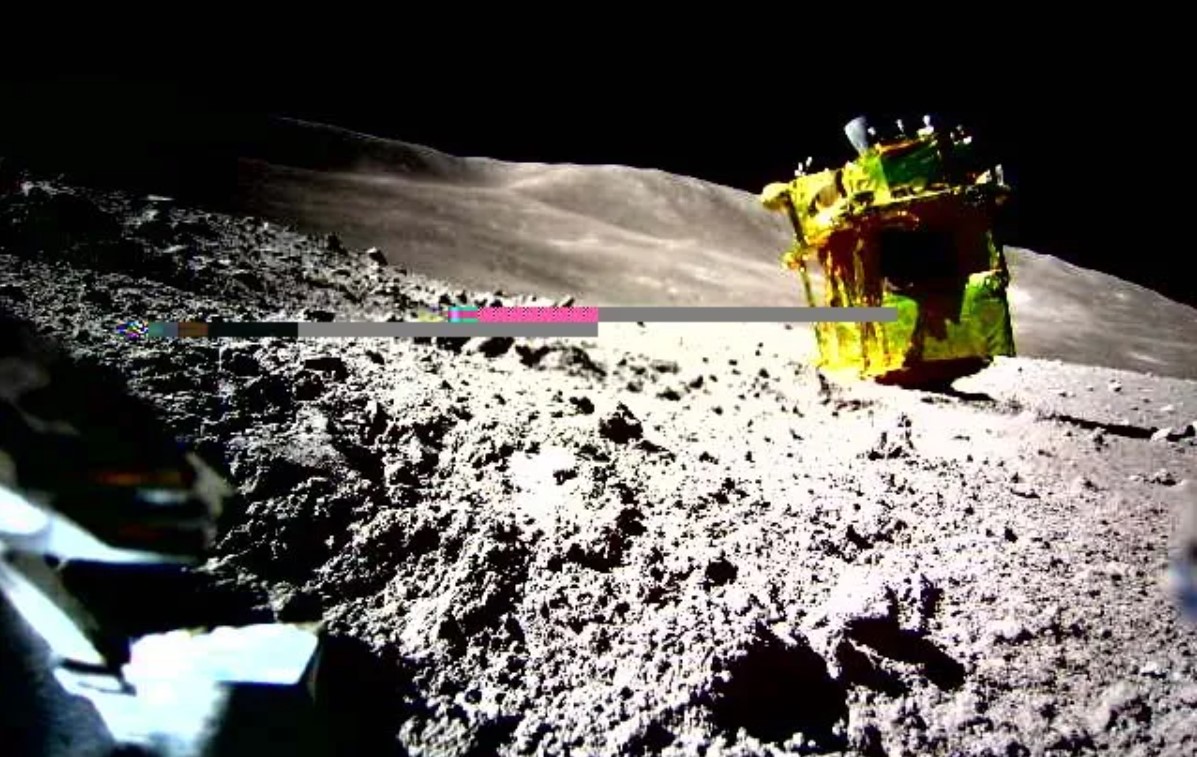
Japan meanwhile landed its SLIM spacecraft on the moon and is part of the NASA-led Artemis program. JAXA and Toyota are collaborating on a pressurized rover for the lunar surface. Its deep space plans include the 2026 MMX mission to collect samples from the Martian moon Phobos.
| Satellite | Space Science/Exploration | Space Transportation |
|---|---|---|
| Communication | Astrophysics | System technology |
| Satellite positioning system | Solar system science and exploration | Structural technology |
| Remote sensing | International space exploration including lunar surface exploration and development | Propulsion technology |
| In-orbit services | Low Earth orbit and international space exploration | Fundamental technologies |
| Fundamental technology | Transportation services | |
| Launch site/spaceports |
Japan’s Cabinet Office and Space Policy Committee are continuing work related to the new fund. A decision on basic principles and implementation guidelines will follow in the coming months.Â
Nakama sees the satellite sector as promising for market expansion due to industrial and national security demands. Space science and exploration, particularly with innovations like crewed pressurized rovers, hold promise for competitive advantage internationally. Challenges remain beyond this, however.Â
“I am concerned about whether Japan’s space industry ecosystem can scale up in a manner that is not dependent on the government by the end of this fund in 2034,†says Nakama. “Simply investing a large amount of funds into potential private actors will not necessarily lead to sustainable industrial development.â€
“The future of Japan’s space industry and domestic economy depends on whether the private sector can utilize this 10-year strategic fund as a means to move away from dependence on government funding to establish industry-led space ecosystems, and whether policies align perfectly with the direction of the private sector.â€
Related
Read the original article here