


GOLDEN, Colorado — A hot topic for moon researchers is whether water ice is an easily accessible resource at the lunar south pole, as experts have long assumed. The search for exploitable water ice is a high priority on NASA’s Artemis agenda as the agency seeks to establish a sustainable human presence on the moon.
Lunar water ice is believed to reside within permanently shadowed regions, or PSRs, contained within super-chilly cold traps, where gasses can freeze to their solid form. However, experts at the Space Resources Roundtable held June 4 through 7 on the campus of the Colorado School of Mines here brought attention to the scarcity of data supporting the prospect of utilizing water ice on the moon. While there appears to be strong evidence that water is present, myriad questions remain that, left unanswered, represent challenges to the assumption that explorers will be able to make use of it.
Technical challenges
“The most ice is expected in old large permanently shadowed craters, but no missions go there because of the technical challenges of landing in the dark and operating in the extreme cold,” Norbert Schörghofer, a Planetary Science Institute senior scientist based in Hawaii told SpaceNews.
However, hopes that there may be abundant water ice on the lunar surface were dashed by data from the Korea Aerospace Research Institute’s Korea Pathfinder Lunar Orbiter, also known as Danuri. It entered lunar orbit in December 2022 and is now slated to continue its lunar observation mission until December 2025.
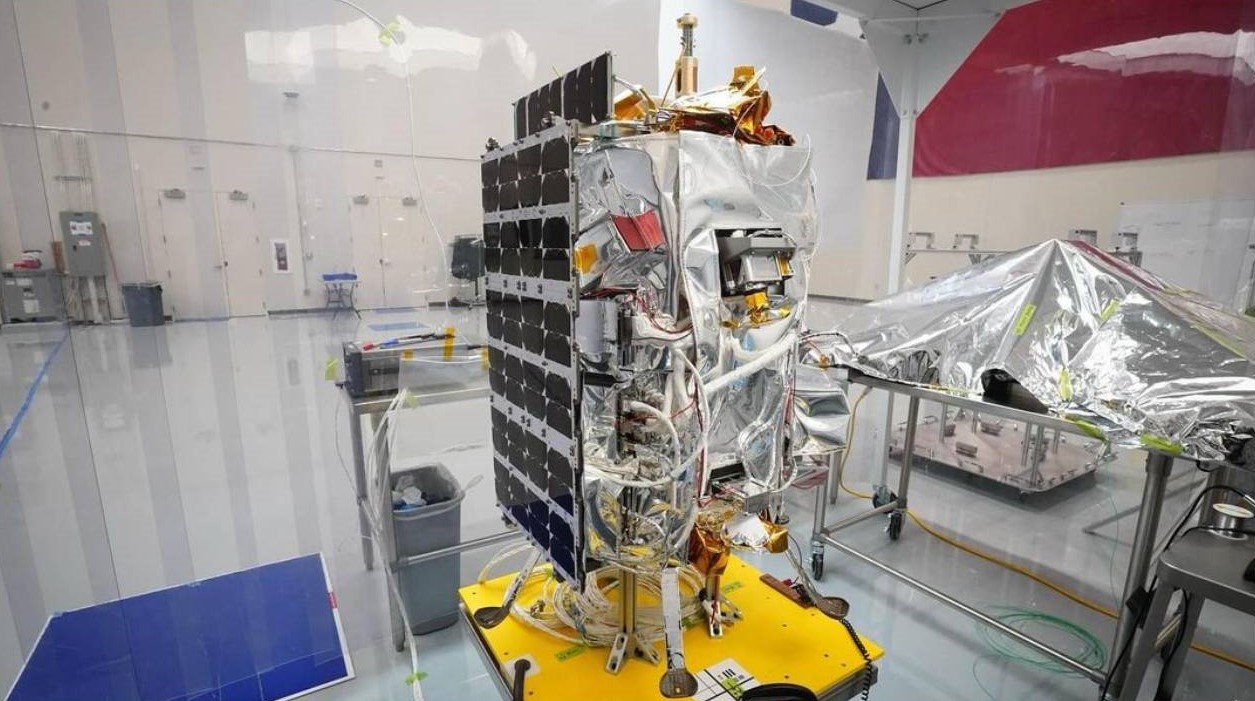
Danuri carries ShadowCam, a NASA-funded instrument, built at Arizona State University, to collect high-resolution images of the moon’s PSRs from lunar orbit to ascertain the distribution and accessibility of water ice and other volatiles. According to Schörghofer, ShadowCam didn’t find the water researchers had hoped to see.
“Although ShadowCam found no evidence for ice in the lunar cold traps, there is still strong evidence for ice in the subsurface,” Schörghofer said. That ice may be present outside of cold traps at shallow depths, a finding that could be verified with a single borehole, he said.
Schörghofer added that several orbital missions found evidence of buried water on the moon, pointing to an instrument onboard NASA’s Lunar Prospector spacecraft that orbited the moon from January 1998 to August 1999 and a Russian-provided instrument on the now-orbiting NASA Lunar Reconnaissance Orbiter. Both lunar orbiters toted a neutron spectrometer instrument that detected hydrogen, assumed to be in the form of water.
“Physical confirmation of water ice could represent a significant impetus to human and robotic exploration,” said Ben Bussey, chief scientist for Intuitive Machines.
Scanning for water
While hinting at evidence from multiple sensors that ice may be abundant on the moon, Bussey said what’s unknown is the location, amount and form of lunar water — and whether it’s feasible to harvest it.
“Physical confirmation of water ice could represent a significant impetus to human and robotic exploration,” said Bussey.
“There is the possibility that even if abundant reservoirs of water exist, it may be too hard to reach,” Bussey told SpaceNews, such as water ice lurking inside PSRs. It could be that the water is so disseminated that extracting the resource would mean processing large amounts of lunar regolith, he said.
Bussey said that the next crucial piece of the puzzle will come from an Intuitive Machines hopper, scheduled to fly to the lunar south pole under NASA’s Commercial Lunar Payload Services (CLPS) initiative, specifically targeting Shackleton Ridge, later in 2024. This area receives enough sunlight to power a lander for roughly a 10-day mission.
The lunar lander also carries the NASA-funded Polar Resources Ice-Mining Experiment-1 to assess water content of regolith and search for other volatiles at the polar lunar landing zone.
That region provides a clear line of sight to Earth for constant communications and could serve as a potential destination for subsequent human exploration.
If the robotic lander touchdown succeeds, it will deploy a Micro Nova Hopper — a propulsive drone funded by NASA. This drone is designed to jump across the lunar surface, Bussey said, and will carry a neutron spectrometer provided by Puli Space Technologies of Hungary into the permanently shadowed floor of Marston crater.
“This will provide the first direct surface measurement of hydrogen, a key indicator for the presence of water,” Bussey said.
Related
Read the original article here